
Often when I mention the option of sportscasting over praise, lectures, or lessons with young children, the response I get either verbally or nonverbally is that sportscasting doesn’t seem to be enough.
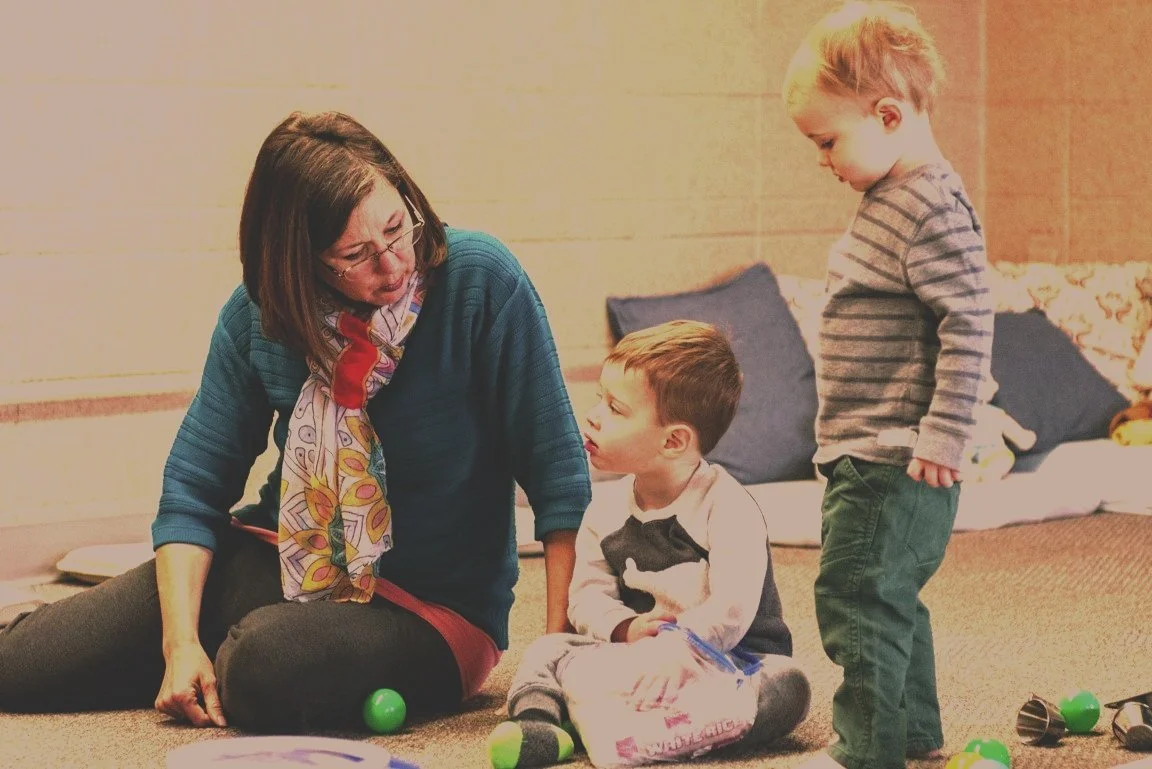
What I most appreciate about sportscasting is that it allows me to stay neutral and let the children decide what to do next (while I still keep them safe). What is hard is that I must be okay with all the feelings and not fixing and solving as quick as I was once wired to do. Sometimes children feel frustrated because they cannot open something, they might be disappointed because they want a toy another child has, or the adults around me might be thinking that I am not doing enough. Many say, and I am sure I did too, that we just want our children to be happy. I have learned that all the other emotions are just as valuable (loss, sadness, disappointment, etc.) and maybe more valuable. When I sportscast children even have the opportunity for greater happiness because they did it! They felt the autonomy, the self-worth, and was NOT given the message, “You can’t do this without my help.” When they have the opportunity to feel all the feelings, they also have the opportunity to get on the other side of them on their own and with sometimes a little support.
Sportscasting, and I’ll get to some examples in a moment, offers the opportunity for all involved to ultimately be seen, valued, trusted, and heard. This supports self-esteem, self-confidence, appropriate risk taking, problem solving, and can often bring the tension down (at least a notch) in the moment.
Here are some examples of sportscasting:
“I see your leg looks stuck in the climber. You are looking at me.”
“Max has the doll in his hands and Lily has the doll in her hands.”
“I see you pulling on the dolls shirt and saying help.”
“You moved your face close to mine and said banana.”
Each of these statements are just the facts. This is what sportscasting is. Often saying factually what you seeing is enough. I want to add, I sportscast when there is a perceived need or the child is looking at me for support, with joy, etc. If the child or children are engaged and not looking my way, I wait.
And yes, sometimes more than simply sportscasting is needed. As a RIE Associate, Parent-Infant Guidance Class facilitator, and parent I have the opportunity to regularly practice this work. It’s such a gift. When I have to do more, I ask myself, “What is the least I can do to offer support while allowing the children to maintain appropriate power, control, have a voice, and foster confidence?” I want to still stay neutral while providing a little more support or information about what I am seeing. This can also be supportive when multiple children are involved so they can begin to understand another’s point of view without taking sides.
Let’s use the quotes from above and take the next step…
Example 1:
“I see your leg looks stuck in the climber. You are looking at me.”
“I am coming closer.”
Example 2:
“Max has the doll in his hands and Lily has the doll in her hands.”
“It looks like Max wants the doll and Lily wants the doll. you both want the doll.”
Example 3:
“I see you pulling on the doll’s shirt and saying help.”
“Are you trying to get the shirt off?” (I don’t want to jump to knowing here, I want to stay curious and let the child lead)
Example 4:
“You moved your face close to mine and said banana.”
“Are you wanting a banana?”
If this is still not enough, I am going to offer just a bit of support, more observation, a suggestion, or some clarity…maintaining neutrality as much as possible…All these steps can happen pretty quickly depending on the degree of the need. Adding pauses in between gives a child an opportunity to process and also make some of their own decisions but when safety is concerned, I do move from one step to the next more quickly.
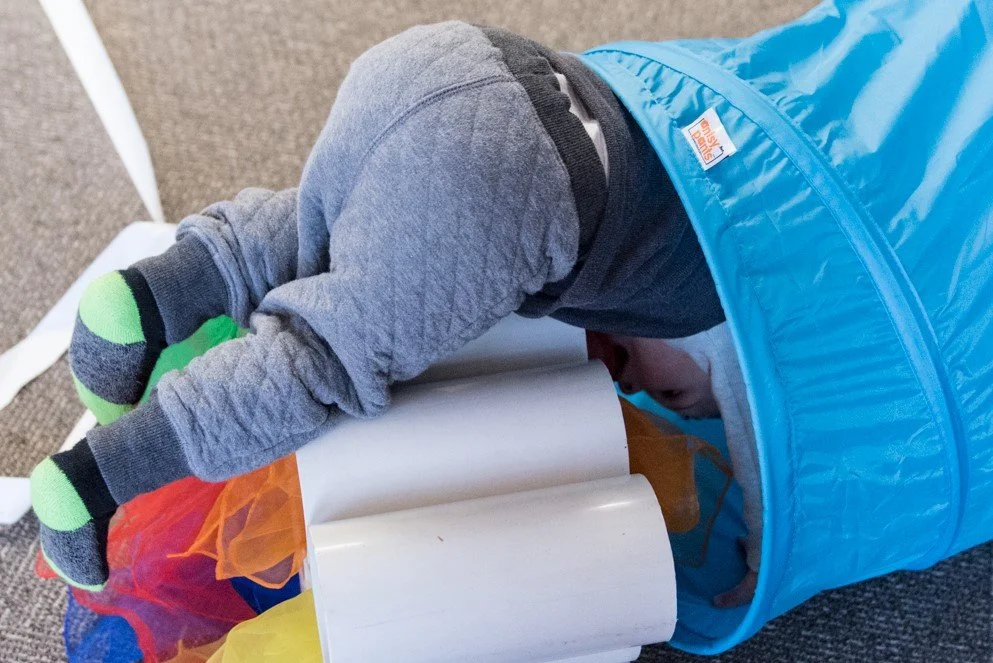
Example 1:
“I see your leg looks stuck in the climber. You are looking at me.”
“I am coming closer.”
“I see you pushing with your hands and your leg is beginning to come out… it went back in.”
If the child remains stuck, I might say, “I am going to put my hands on your sides so you can try again” …I want to allow them to do most (if not all) of the work. I don’t want to be perceived as having superpowers. I want them to feel and be the main problem solver in this situation. I am simply their partner and support. Usually in this situation once they are freed, they are going to do it again and again until they get it figured out. If I help too much, I am causing more opportunities for them to get hurt, should I not be right there next time when they are climbing. Safety is key here too! If the child is unsafe I move quickly and calm is what I bring to the situation.
Example 2:
“Max has the doll in his hands and Lily has the doll in her hands.”
“It looks like Max wants the doll and Lily wants the doll. you both want the doll.”
“I see you both pulling and your bodies are moving. I am going to hold the doll with you both so neither of you fall over when figuring this out.” (I might also put my hands behind each child to prevent falling, I might repeat what I see too)
At this point often one child lets go as almost to say without saying, “I see you need this more than me.” or “I don’t want this anymore.” or “I am going to find something else.” If they don’t I continue to be with, trust, while keeping them safe. This can be hard for you and the children. If they are used to you solving, I might say, “I usually decide what happens, but I think you both got this. I am here.” If pulling continues I could offer other options in the room, but I find I rarely if ever must do this.
Example 3:
“I see you pulling on the dolls shirt and saying help.”
“Are you trying to get the shirt off?”
If they are still interested in getting the shirt off and expressing the need for help, I might add, “I see you are pulling on the bottom of the shirt. I wonder if there is another way to pull?” I might continue to offer these curiosities with pauses in between and might also offer for them to pause and come back if the frustration becomes overwhelming for them but the need to get the shirt off is still present. I do not take the doll shirt off and offering a pause might sound like this, “You seem to really want the shirt off. I hear your voice getting louder and I see you pulling very hard.” I am wondering if it might be helpful to give your arms a rest and come back. You can leave your doll here or I can hold it for you.” They might decide to pause they might not. They might find something else to do. The goal is not that they get the shirt off today. It’s when they can do it. This could take days, months years, etc. I can almost promise when they are 18, they can do it. Our job is to be with, wait, trust. Their job is to try until they don’t want to anymore or try until they get it. When they get that shirt off, they get to feel the joy. When we do for, we take away the opportunity for learning.
Example 4:
“You moved your face close to mine and said banana.”
“Are you wanting a banana?”
“I will be getting up when I am done talking with your mom and then I will be getting the bananas. “
If the frustration is growing, I might add, “It is so hard to wait sometimes. Do you want to sit with me while I finish, or do you want to find something else to play with while you wait?”
Our journey of being with children is different for each of us. Some of you might have been working with children for 30 years, some might be new to this work. You may be a new parent, a parent of four children or something in between. Give sportscasting a try if it feels right for you in your own words and give yourself grace along the way. Often it starts with noticing your fixing for a child, next you might begin adding sportscasting, then slowly taking away the fixing. It is our job to keep children safe but their job to solve when possible. I’d love to hear about your thoughts and experiences as you add sportscasting to your care. Post them here or send me a message.